Showing posts with label heating. Show all posts

Thursday, September 8, 2011

It's Time to Clean Your Chimney!

Soot build-up in home inspected in
Franklin, TN last month
 How often should I have my chimney cleaning?

This a tougher question than it sounds. The simple answer is: The National Fire Protection Association Standard 211 says, "Chimneys, fireplaces, and vents shall be inspected at least once a year for soundness, and repairs shall be done if necessary. "This is the national safety standard and is the correct way to approach the problem. It takes into account the fact that even if you don't use your chimney much, animals may build nests in the flue or there may be other types of deterioration that could make the chimney unsafe to use.
Insect nests can be the source of a fire

The Chimney Safety Institute if America recommends that open masonry fireplaces should be cleaned at 1/4" of sooty buildup, and sooner if there is any glaze present in the system. Factory-built fireplaces should be cleaned when any appreciable buildup to cause a chimney fire capable of damaging the chimney or spreading to the home.

Friday, April 15, 2011

Lennox Industries Recalls to Repair Garage Heaters Due to Fire Hazard

WASHINGTON, D.C. - The U.S. Consumer Product Safety Commission, in cooperation with the firm named below, today announced a voluntary recall of the following consumer product. Consumers should stop using recalled products immediately unless otherwise instructed. It is illegal to resell or attempt to resell a recalled consumer product.


Name of Product: Garage heaters
Units: About 440
Distributor: Lennox Industries Inc., of Richardson, Texas
Manufacturer: Lennox Industries Inc., of Richardson, Texas or Advanced Distributor Products (ADP) LLC, of Grenada, Miss.
Hazard: Some heaters were manufactured without a required flame rollout switch, which is a back-up device that shuts down the heater in the event of a heater failure. This poses a fire hazard.
Incidents/Injuries: None reported.
Description: This recall involves Lennox garage heaters with heating capacity, model number, and serial number listed below. The brand name "Lennox", the model number and the serial number can be found on the nameplate located inside the control cabinet.

To read full details, including model numbers, go to: http://www.cpsc.gov/cpscpub/prerel/prhtml11/11197.html

Thursday, September 9, 2010

Helpful Resources for our clients has been updated

Click here to access the most up-to-date list of resources that we can recommend to contact. 2Patriots only lists services and businesses that have been referred to us by our clients. We do not post any "ratings" - however, if we ever receive a negative comment OR if a client states that they didn't get a return phone call in a normal amount of time, the service/business will be removed from this list.

Saturday, November 21, 2009

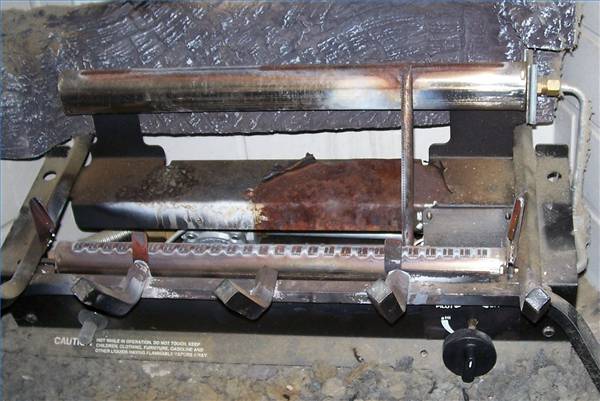
Gas Lighter Bars and Gas Log Maintenance

Those handy gas starter pipes start a fire quickly, but they deteriorate over time and need to be replaced (as do their gas mixing valves). Look for excessive rust scaling, cracks, stripped threads on the joints or blocked gas outlet holes. Many fireplace/heating supply stores carry them or can order them for you. Be sure to get the proper natural gas or propane mixing valve.

Gas logs should be serviced annually (we suggest your dealer) to help assure proper performance. Over time, the materials that help create the realistic gas flame will become worn and dirty, and replacing the embers and sand/vermiculite will help your log set perform and look like new. Consult your Owners Manual to determine the correct type of material to use and how it should be applied.

Do not substitute materials or attempt to make alterations to your gas log set; doing so may cause dangerous conditions. Some helpful items to renew the realism of your fireplace include soot remover spray, replacement "glowing ember" lava rocks and rock wool mixture to replace the original material that came with your gas log set.

Saturday, November 7, 2009

Top 10 Woodburning Tips


To aid in the prevention of chimney fires and carbon monoxide intrusion and to help keep heating appliances and fireplaces functioning properly, the Chimney Safety Institute of America (CSIA) offers the following safety tips:


1. Get an annual chimney check. Have chimneys inspected annually, and cleaned as necessary, by a qualified professional chimney service technician. This reduces the risk of fires and carbon monoxide poisonings due to creosote buildup or obstructions in the chimneys.

2. Keep it clear. Keep tree branches and leaves at least 15 feet away from the top of the chimney.

3. Install a chimney cap to keep debris and animals out of the chimney.

4. Choose the right fuel. For burning firewood in wood stoves or fireplaces, choose wellseasoned wood that has been split for a minimum of six months - one year and stored in a covered and elevated location. Never burn Christmas trees or treated wood in your fireplace or wood stove.

5. Build it right. Place firewood or firelogs at the rear of the fireplace on a supporting grate. To start the fire, use kindling or a commercial firelighter. Never use flammable liquids.

6. Keep the hearth area clear. Combustible material too close to the fireplace, or to a wood stove, could easily catch fire. Keep furniture at least 36” away from the hearth.

7. Use a fireplace screen. Use metal mesh or a screen in front of the fireplace to catch flying sparks that could ignite or burn holes in the carpet or flooring.

8. Install smoke and carbon monoxide detectors. Place detectors throughout the house and check batteries in the spring and fall. When you change your clocks for Daylight Savings Time, remember to check your batteries.

9. Never leave a fire unattended. Before turning in for the evening, be sure that the fire is fully extinguished. Supervise children and pets closely around wood stoves and fireplaces.

10. The CSIA recommends annual inspections performed by CSIA Certified Chimney Sweeps. These chimney sweeps have earned the industry's most respected credential by passing an intensive examination based on fire codes, clearances and standards for the construction and maintenance of chimney and venting systems. The National Fire Protection Association also recommends that all chimneys are inspected on an annual basis.

Have Your Heating Units Checked Now

No matter how you heat your home during the cold months, you need to have your heating unit checked out by your HVAC technician to make sure it is working properly.

If you use a kerosene heater for backup heat, make sure you have kerosene on hand and make sure the heater is in good working order with no leaks. If your kerosene heater is leaking it can cause a fire. It would be best to buy a new one if there is a leak.


By performing these routine maintenance measures now, you can prevent possible problems later on during the cold months. If you have to have repair work done during the colder weather, it could be more costly than having the maintenance work done now.

If you do not have a company that performs your routine maintenance checks on your HVAC units, visit our HELPFUL RESOURCES page to view the list of customer referred vendors.